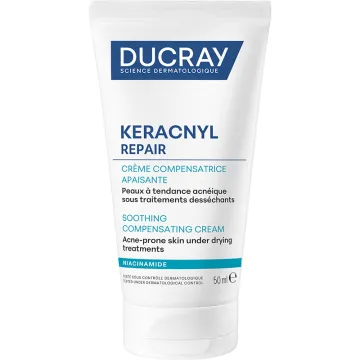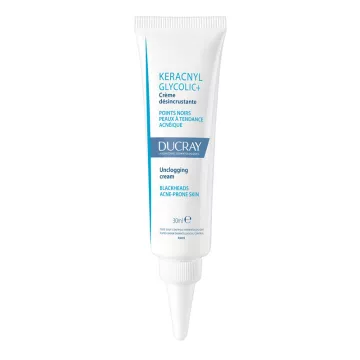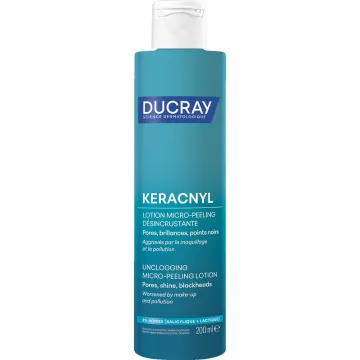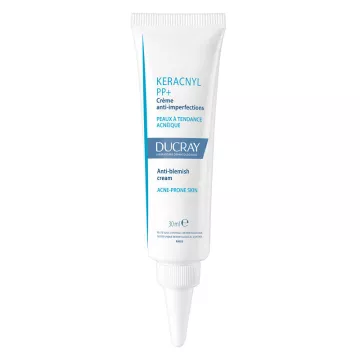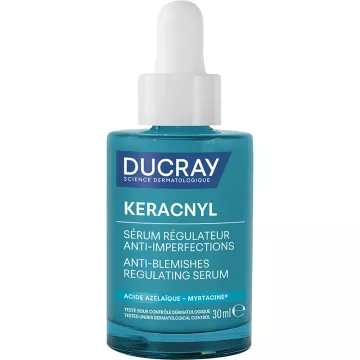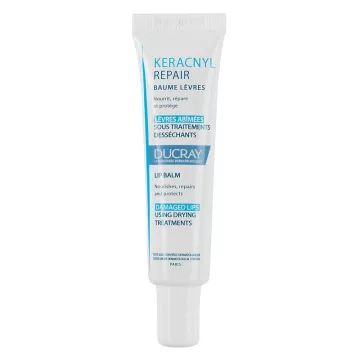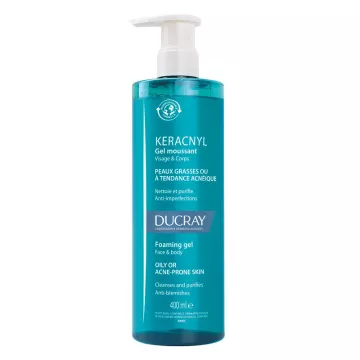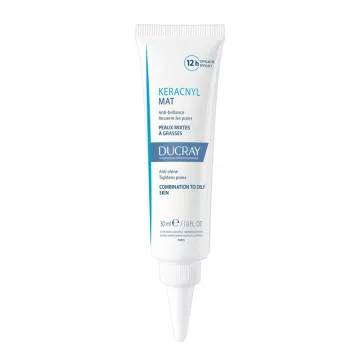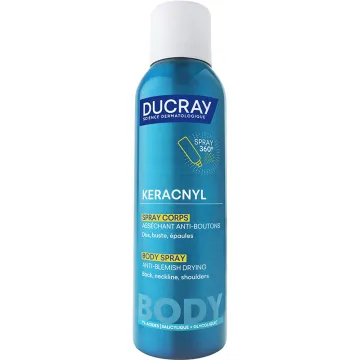
On Soin et Nature, discover Ducray Keracnyl, a line of dermatological skincare products specially formulated to combat acne and skin imperfections. Formulated with targeted and effective active ingredients, Keracnyl helps cleanse, purify, and rebalance the skin, while preventing the appearance of new breakouts for clear, healthy skin.
More detailsDucray has developed a line to support people with oily or acne-prone skin: Keracnyl. This line provides functional care using targeted active ingredients. Everyone can find their ideal skincare routine with this line—whether used on its own or in combination with prescription treatments, depending on the severity and specific nature of their skin concerns.
Acne is a common skin condition among teenagers, but it is also common in adults and even in babies. Acne is a chronic dermatological condition that often persists for several years. Flare-ups alternate with periods of remission, depending on the seasons, aggravating factors, and how closely treatment protocols are followed…
Acne breakouts are unsightly and often cause distress for people who have them on their face and/or body. At the same time, many misconceptions circulate about acne, its causes, and its treatments. This guide will help you understand the facts and find a solution tailored to your needs.
There are three main types of acne:
This is the most common form of acne. It’s also called “teen acne” simply because it mainly affects teenagers and preteens. It typically appears between the ages of 12 and 20. This type is often described as “mixed” because it involves a combination of different types of breakouts: blackheads, microcysts, and red pimples. The skin is often oily, and the pores are enlarged. This type of acne is linked to puberty and the production of sex hormones, including androgens. These male hormones are also present in girls and stimulate the sebaceous glands, which produce sebum.
This is a form of acne that affects babies from 0 to 3 months of age. After this period, the term “infantile acne” is typically used instead. The infant’s face becomes covered with small bumps, including both blackheads and the redness typical of acne. This acne lasts a few weeks at most and may, in rare cases, persist for several months. It disappears as quickly as it appeared. This condition does not bother the infant and in no way hinders their normal development. A baby with acne is no more at risk of developing it during adolescence.
In contrast, adult acne often has a significant impact on quality of life and can strain professional, social, or romantic relationships. The underlying cause should be identified, and then a treatment tailored to adult acne should be started. In any case, the effectiveness of acne treatments varies from person to person and from one period to another. Avoid comparing yourself to a classmate or the neighbor next door!